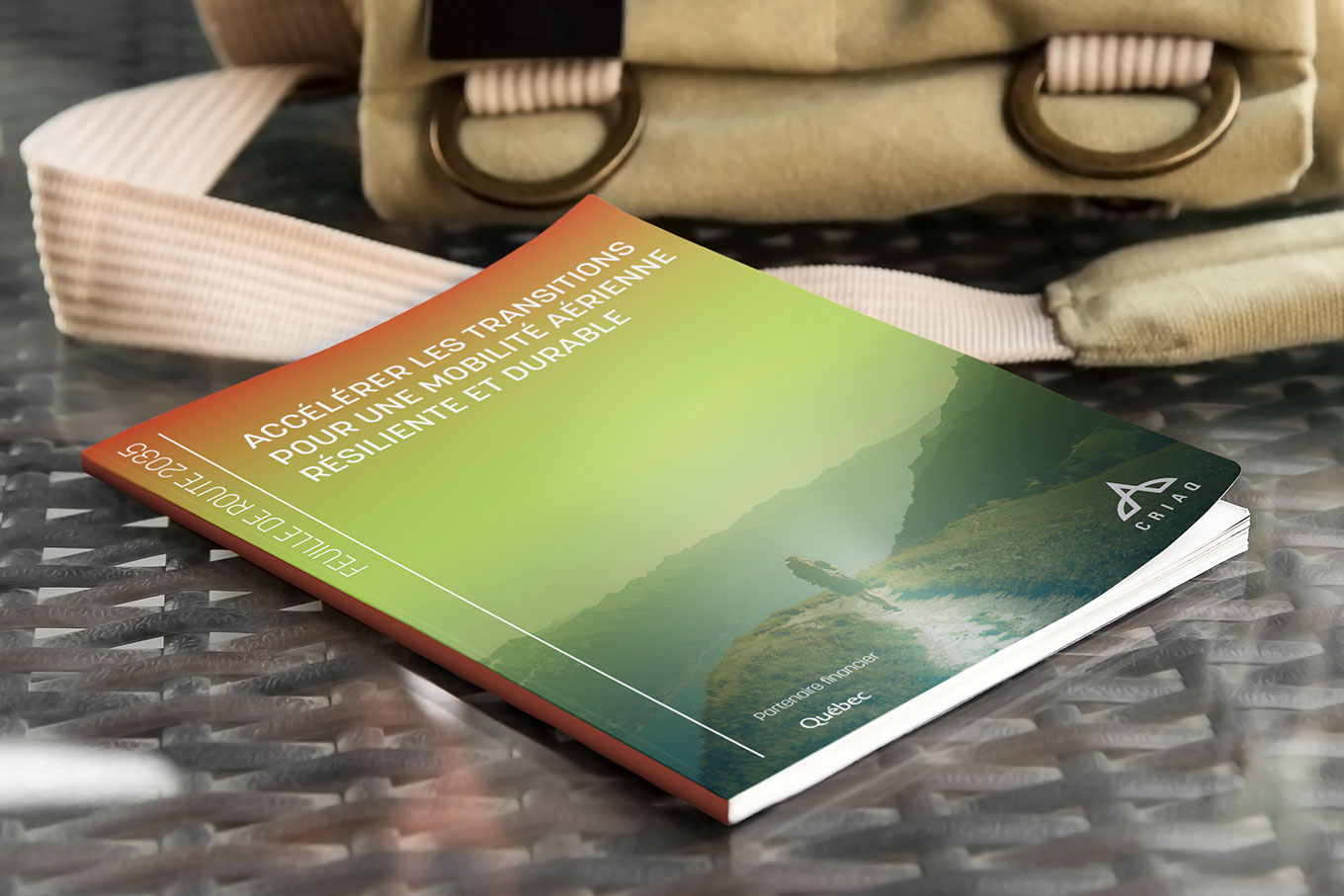
Foreword
For the aerospace research and innovation ecosystem of Quebec and Canada, CRIAQ’s Roadmap 2035 represents the commitment of the industry, research community and governments to meet the challenges posed by climate change and those linked to a safe evolution of air mobility.
3 major vectors of technological change and transition highlight the key issues to be addressed by researchers and innovators.
Each of these outlines its own challenges and courses of action, based on the technological clusters and trajectories to be explored to guide research and innovation and accelerate transitions towards 2035 and beyond.
Sustainable Aerospace
Air Mobility of the Future
Digital Aviation Systems
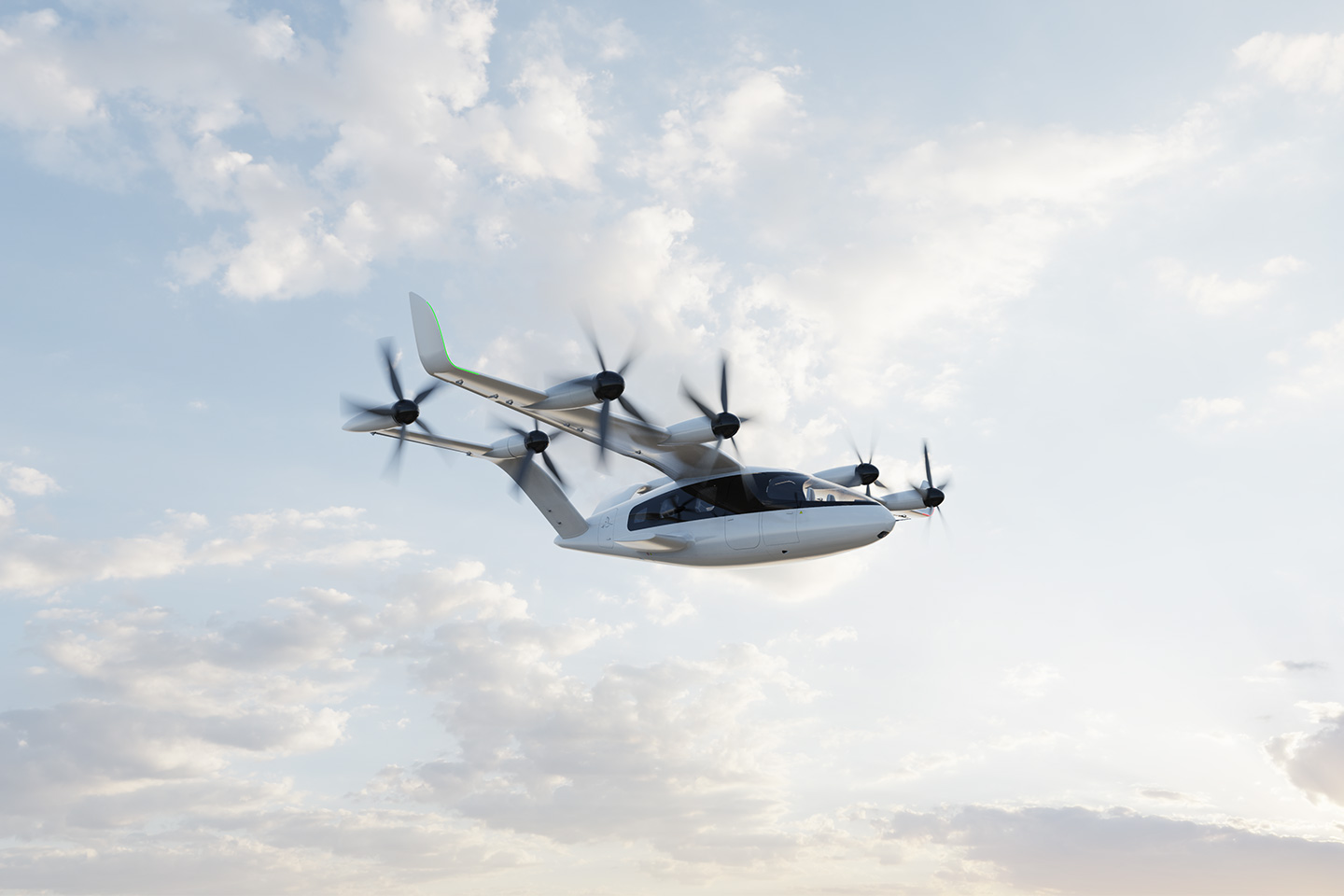
CRIAQ is committed to mobilizing and stimulating the ecosystem through R&D programs and targeted initiatives to drive concrete change towards resilient, integrated and sustainable air mobility – project by project.
The Roadmap 2035 is...
Anchored at the heart of CRIAQ’s Strategic Plan 2022-2025
Aimed at driving sustainable aerospace, it is structured around 4 pillars to strengthen the research and innovation ecosystem and stimulate partnerships between industry, universities, colleges and research centers in Quebec, Canada and internationally.
Read the Strategic Plan SummaryAligned with the Quebec Government's ‘Quebec Aerospace Strategy - Horizon 2026
The strength of Quebec’s aerospace industry lies in the large number of prime contractors, equipment manufacturers, suppliers, and specialized subcontractors. It forms a truly world-class ecosystem, whose members have established close ties through large-scale collaborative projects.
CRIAQ’s mission is to increase competitiveness by stimulating business innovation through collaborative R&D, technology demonstrations for SMEs and large-scale demonstrations.
Discover the Quebec Aerospace Strategy - Horizon 2026Fueled by the ecosystem's vision and outlook
One of our tools for implementing the Roadmap 2035 is the RDV Forum, one of the aerospace industry’s flagship events. Dedicated to innovators ready to meet the challenges of tomorrow’s air mobility: sustainable, digital, and integrated, it enables the acceleration of technological developments.
To meet the challenges of today and tomorrow, the RDV Forum creates and supports interdisciplinary and cross-sectoral cooperation. It’s an opportunity for industry and research to come together, exchange ideas and collaborate on innovative projects.
Discover CRIAQ's RDV ForumThe Roadmap 2035 aims to...
01.
Rally the ambitions of the industry and the research community to develop the knowledge and skills needed by the next generation of innovators and entrepreneurs.
02.
Emphasize the engagement of all partners to accelerate commitments towards resilient and sustainable air mobility to achieve carbon neutrality goals.
03.
Support the deployment of new call-for-ideas programs, project solutions and multidisciplinary, cross-sectoral research programs.
04.
Accelerate the much-needed expansion and consolidation of SMEs and start-ups.
05.
Stimulate public and private investment in Quebec and Canada.
06.
Align investments to stimulate productivity through research and innovation, by promoting the creativity, training, maturation, demonstration and commercialization of innovations.
Vectors and strategic clusters
- Sustainable aerospace
- Air mobility of the future
- Digital aviation systems
Sustainable aerospace
International civil aviation players are mitigating current challenges by stimulating targeted and collective actions to achieve ambitious global targets for limiting CO2 emissions and achieving carbon neutrality by 2050.
With research and innovation projects of varying size and technological maturity, CRIAQ aims to contribute to these efforts to develop and demonstrate integrated aeronautical technologies towards deep decarbonization while guaranteeing safety and security.
Technology Clusters
- Operation
- Propulsion and energy
- Manufacturing and supply chain
- Design and integration
Aircraft operations
Examples
Using AI to optimize trajectories, new aircraft systems, fuel cells for airport ground power.
Infrastructure change
Examples
Hydrogen at airports for ground transportation, safety aspects and certification (hydrogen), model-based validation and certification.
Airport operations
Examples
Optimized sustainable air operations and networks (MRO), air traffic management.
Hybrid-electric regional aircraft
Examples
Key technologies (e.g. distributed propulsion), enabling technologies for aircraft integration, integrated technologies for climate-neutral regional aircraft.
Ultra-efficient short/medium-range aircraft
Examples
Development and integration of propulsion systems, sustainable fuels, with or without additives, new energy carriers, high-power fuel cells.
Hydrogen-powered aircraft
Examples
Integration of hydrogen-powered aircraft, hydrogen propulsion systems.
Manufacturing
Examples
sustainable manufacturing technologies, multidisciplinary digital twins (full lifecycle), embedded sensors, communication platforms.
Aviation ecosystem
Examples
hydrogen for metal and steel production (replaces fossil fuels in industrial processes with a high carbon footprint), reducing GHG impact on the life cycle of aircraft materials. Aviation’s impact on climate excluding CO2.
Supply chain
Examples
Sustainable life-cycle technologies.
Airframe
Examples
Airframe and cabin technologies, modular aircraft configurations reducing environmental impact and noise footprint during take-off and landing.
New aircraft configurations
Examples
Developing technologies for improved local air quality (LAQ), models for highly accurate measurements, platform integration.
User experience
Examples
Ecosystem technologies (health, cybersecurity).
Air mobility of the future
Inventing tomorrow’s aviation offers an opportunity to embrace sustainable solutions and rethink air mobility. The emerging urban and interurban air mobility offers new avenues for development in transportation for decision-makers and stakeholders who can effectively harness them.
In addition to ongoing and planned projects on the development and demonstration of vertical take-off and landing technologies, calls for projects are launched to design, build, and operate these types of vehicles within an integrated transport system, which must be socially accepted and safe.
Technology Clusters
- Passenger Transport
- Cargo/Other Transportation
- Flight Operations
- Physical Infrastructure
- Digital Infrastructure
Multimodality
Examples
Reservation platforms for all modes of transportation, interoperability.
User Experience
Examples
Purchasing a travel experience instead of a ticket (price difference), new travel options based on personal situations (e.g., passengers with reduced mobility).
New Aircraft Types
Examples
Urban taxis, airport shuttles, interurban flights.
Drone Deliveries and Services
Examples
Electric propulsion drone deliveries (e.g., passenger luggage), support for industrial supply chains, infrastructure inspections assisted by drones.
Search and Rescue, Humanitarian Missions
Examples
Drones and satellites for rescue missions, ground observation, and humanitarian and medical prevention/interventions.
Air Traffic Management
Examples
Autonomous systems, drone certification, positioning, and coordination systems for autonomous units.
Ground Stations
Examples
Charging, storage in new urban landing stations, constellation management.
Vertiports, Hubs, Nodes
Examples
Landing stations connecting to airports, new networks, and infrastructures.
New MRO Facilities
Examples
On-demand and regular maintenance and repair operations.
User Experience
Examples
Communication systems, cybersecurity.
Network
Examples
Enhanced digital network, bands, 5G/6G, Zero Latency communications.
Air Traffic Management (ATM) Systems
Examples
Air traffic management, dynamic and optimized flight corridors, interoperability (multi-orbit, multi-frequency, multi-service).
BVLOS Systems
Examples
Drone control and piloting centers.
Digital aviation systems
Aviation is quickly transitioning to digital, becoming a driving force for transformation and profound evolution within our ecosystem. Several existing and new activities provide companies with significant opportunities for innovation through digital solutions.
CRIAQ dedicates specific resources to organize technological development activities supporting both existing and new niches in the value chain of integrated digital aviation systems. Stakeholders from the aerospace ecosystem as well as from other digital technological sectors are participating in technological research and innovation projects.
Technology Clusters
- Human-Machine Collaboration
- Data Sharing and Collaboration Platforms
- Product Lifecycle
- Security and Simulation
Air Operations
Examples
Quality inspection assisted by augmented and virtual reality, trajectories optimized by AI, in-flight safety enhancement through AI pilot assistance.
Ground Operations
Examples
Digital control tower and piloting.
Data Sharing
Examples
Data lakes, on-board and on-site communication sensors/platforms (satellite/drone/plane – ground segment), cloud info and data infrastructures.
Crowdsourcing and Open Data
Examples
Common database and AI infrastructure.
Platforms
Examples
Digital and virtual collaborative network, demonstration and certification platforms.
Production side
Examples
Multidisciplinary digital twins covering the entire aircraft life cycle, predictive analysis (supply chain, MRO).
Services
Examples
New products and services powered by AI impacting productivity, efficiency, automation, and costs.
Development
Examples
Digital aircraft: design and manufacturing – operations and recycling, acceleration of the aircraft development process.
Simulation
Examples
Examples – Physical digital demonstration aircraft at scale for education and R&D, digital twins, digital factory.
Cybersecurity, Resilience
Examples
Technologies, resilience models for aeronautical systems (extreme weather conditions, cyberattacks), connected aircrafts for flight trajectory management and security.
New Certification
Examples
AI certification for aviation, new methods, tools, and digital certification processes, technologies…
Projects related to Sustainable aerospace
Funded project completed
Maturing-Innovation
AHEAD
Hydrogen Electric Architecture for the Aviation of Tomorrow
Sustainable aerospace
Funded project completed
Exploring-Innovation
ACTec
Advanced Compressor Technologies
Sustainable aerospace
Funded project completed
Exploring-Innovation
AACryoM
Aluminum Alloys Cryogenic Machining
Sustainable aerospace
Funded project in progress
Exploring-Innovation
ACI-OPT
Aircraft Component InstallationOPTimization algorithm
Sustainable aerospace
Funded project completed
Maturing-Innovation
AirsideAI
Airside Instant Inspection and Maintenance by Drones
Sustainable aerospace
Projects related to Digital aviation systems
Funded project completed
Exploring-Innovation
3.4
Development of Global Model Parameter Estimation Technology
Digital aviation systems
Funded project completed
Exploring-Innovation
ADIMOR
Automated detection of methane plumes of satellites and airborne images and use of AI to optimise the reading of observations
Digital aviation systems
Funded project completed
Exploring-Innovation
ADAIR
Advanced AIRspace usability
Digital aviation systems
Funded project in progress
Exploring-Innovation
ACI-OPT
Aircraft Component InstallationOPTimization algorithm
Digital aviation systems
Funded project completed
Maturing-Innovation
AirsideAI
Airside Instant Inspection and Maintenance by Drones
Digital aviation systems
Projects related to Air mobility of the future
Funded project completed
Maturing-Innovation
AUT-1629_TRL4+
An IoT Platform for Disaster Response
Air mobility of the future
Funded project completed
Maturing-Innovation
AUT-1653_TRL4+
An Intelligent mixed-reality Simulation & training ecosystem for Extreme Environments
Air mobility of the future
Funded project completed
Maturing-Innovation
AirsideAI
Airside Instant Inspection and Maintenance by Drones
Air mobility of the future
Funded project completed
Maturing-Innovation
AMAF
Autonomy of Future Air Mobility
Air mobility of the future
See the full Roadmap 2035
Read the document